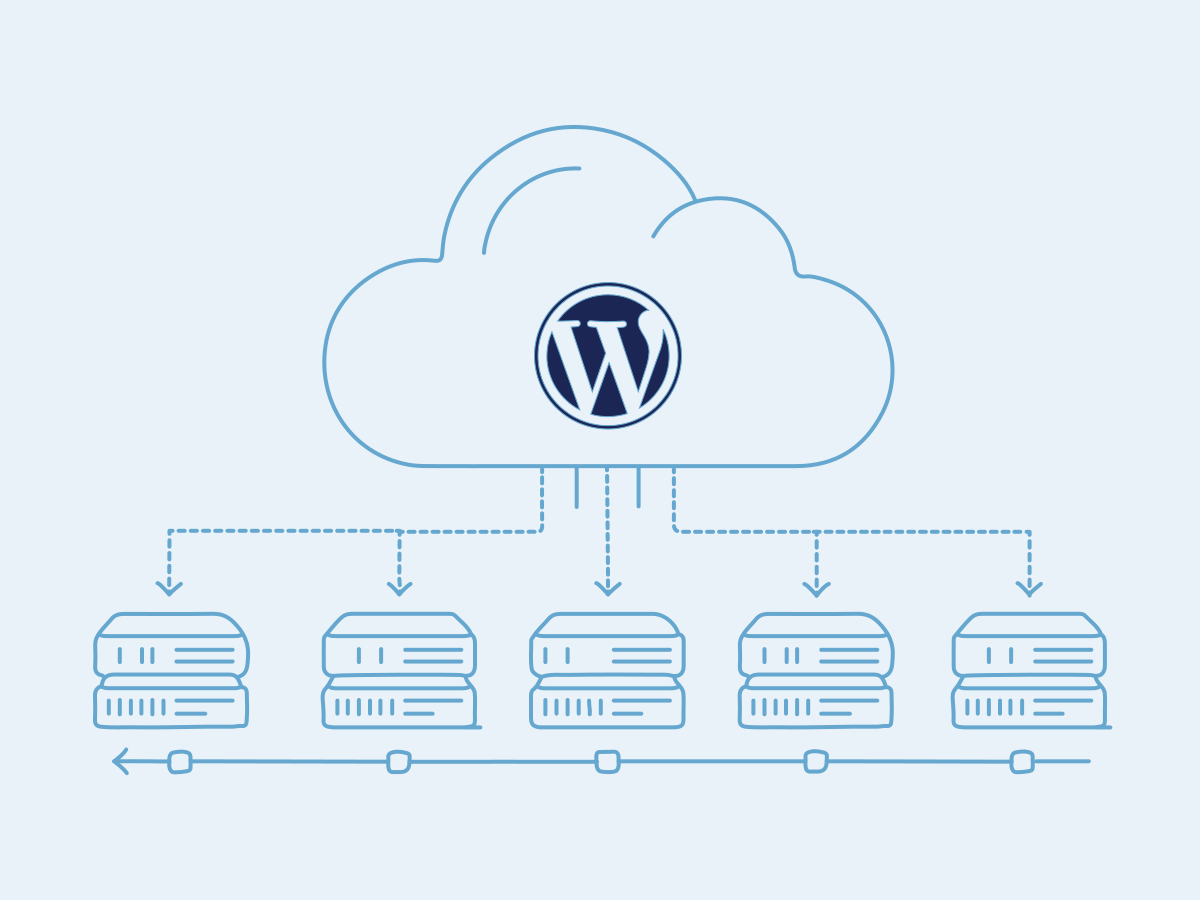

For healthcare organizations at scale, the inability to update a website quickly is rarely a minor inconvenience. It compounds. Marketing teams lose efficiency. Clinical operations absorb unnecessary friction. And patients, the people the organization is there to serve, are the ones who feel it most directly.
A well-defined content strategy and a content management approach built around your team’s actual workflows are what close the gap between what your site says and what’s actually true.
The Hidden Cost of a Website Your Clinical Team Can’t Update
Imagine this scenario. Your flagship orthopedic clinic permanently relocates to a new facility over the weekend. The clinical director emails your marketing team on Friday afternoon to update the address on the website. Because your marketing team lacks direct access to the backend, they submit a priority ticket to IT or your external development vendor.
Monday morning arrives. The ticket sits in a queue. By noon, a dozen frustrated patients have shown up at the old, empty building. They missed their appointments. The clinical schedule is in chaos. Your brand reputation just took a localized but measurable hit.
For marketing leaders managing mid- to large-scale healthcare enterprises, this is not a hypothetical. Healthcare marketing teams frequently depend on internal IT departments or outside vendors to make basic content changes. When you cannot update your own website efficiently, you create a structural bottleneck. That dependency does more than cause internal frustration. It erodes patient trust, drains budget, and prevents you from getting full value from your digital campaigns.
Here is what it actually costs when your clinical team cannot update the website — and what changes when you put that control back in their hands.
The Real Price of the IT Ticketing Queue
Agility matters. When you launch a new service line or bring a new practice into the network, your digital presence needs to reflect that immediately.
If updating a paragraph of text, swapping a provider headshot, or correcting clinic hours requires a developer, you are losing time you cannot recover. Every hour a vendor takes to process a simple change request is a lost opportunity. You are also paying retainer fees for tasks a non-technical staff member could complete in five minutes.
The bottleneck has a direct downstream effect on patient acquisition cost. Marketing dollars driving traffic to outdated landing pages produce lower conversion rates. You cannot run real optimization if deploying a basic headline test takes two weeks. The slower your team can iterate, the harder your budget has to work for the same results.
How Delayed Updates Erode Patient Trust
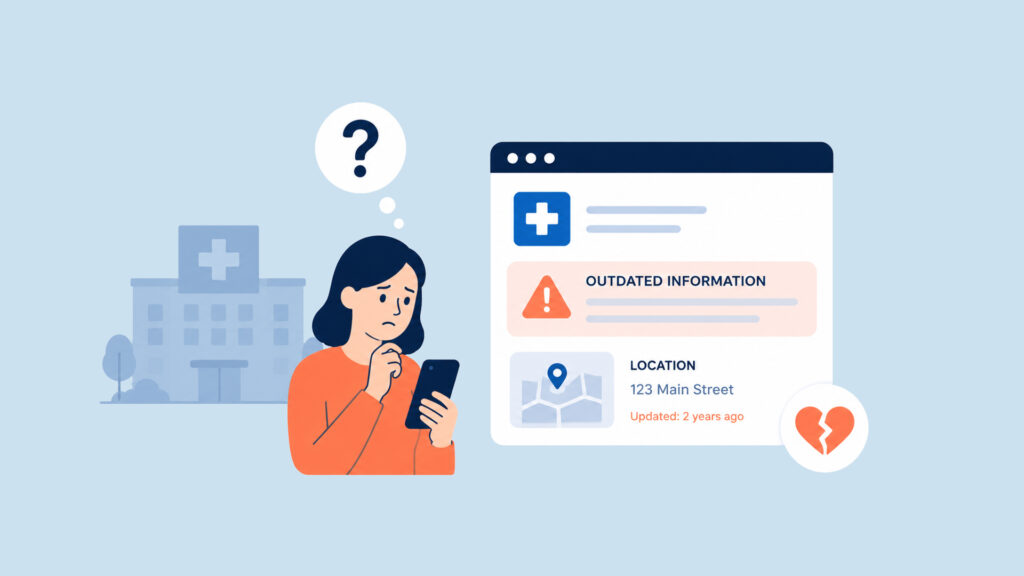
Patients now expect accurate, accessible digital information as a baseline — not a differentiator. When your website presents outdated information, it introduces doubt. And in healthcare, doubt is expensive.
Outdated Provider Availability
Finding a physician and booking an appointment is one of the primary reasons someone visits a health system website. Provider rosters change constantly: specialists join the network, physicians stop accepting new patients, clinical focus shifts.
If a patient spends time researching a cardiologist on your site, decides to book, and then learns that physician left the network three months ago, that patient is not going to search for another doctor within your system. They will go elsewhere. You lose the lead, and the trust required to earn it back is significant.
Stagnant Service Updates
Healthcare services evolve rapidly. Visitor protocols, walk-in capacity, telehealth availability — this information is time-sensitive in a way that most content simply is not.
When service updates lag behind reality, patients arrive with the wrong expectations. They might come to a location expecting a lab that recently closed, or remain unaware of an elective service your team just launched. If your clinical staff cannot push these updates live, the campaigns promoting those services will underperform before they begin.
Critical Location Changes
Nothing undermines the patient experience more directly than sending someone to the wrong address. Location data must be accurate across your website, Google Business profiles, and patient portals simultaneously. Relying on a vendor queue to manage those updates introduces delay that has real consequences: missed appointments, disrupted care, and public-facing reviews that take months to offset. Accuracy is not a nice-to-have in this context. It is the minimum standard.
The Financial Drain on Your Marketing Budget
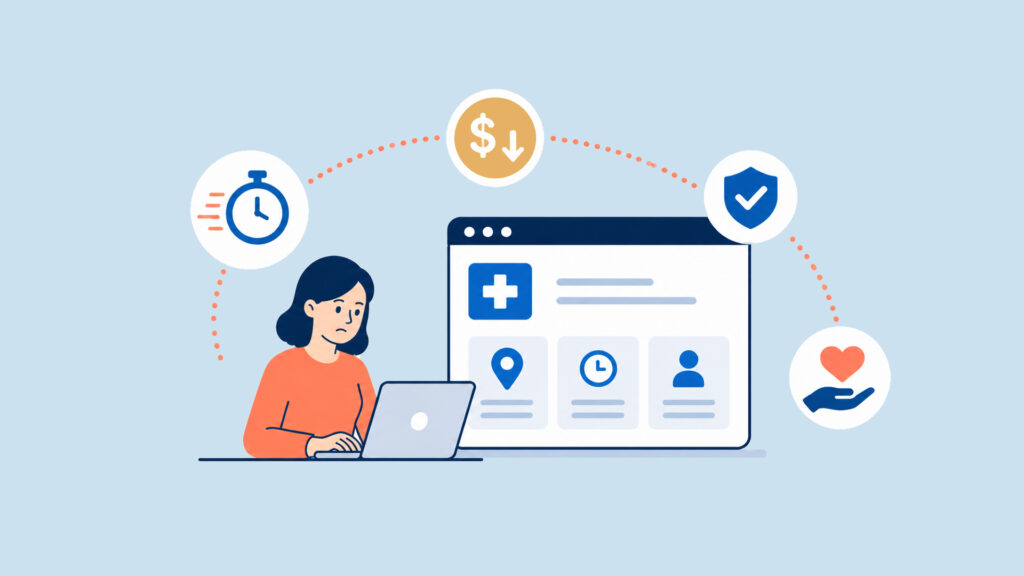
The budget impact of an uneditable website is real and recurring. In patterns we have seen across mid-size healthcare clients, basic content requests — address changes, provider bios, clinic hours — routinely generate two hundred to four hundred support tickets annually. At even a modest per-ticket cost, that translates to tens of thousands of dollars a year in avoidable maintenance spend. In one case, a regional health system needed nearly two weeks to publish updated care protocols. The delay generated a wave of misinformed patient contacts and a documented spike in negative feedback.
These are not edge cases. They are the ordinary cost of building a website your team cannot manage independently.
That cost compounds. Every support ticket consumes billable hours. Across a fiscal year, minor requests add up to a meaningful share of budget that should be funding strategic work: market expansion, targeted campaigns, new tools. Instead, it funds maintenance.
There is also a less visible cost: your marketing team’s attention. Rather than using data to refine strategy, experienced professionals spend time chasing tickets, managing vendor relationships, and explaining to clinical directors why a simple update is still pending.
Giving Your Team Direct Control with a Flexible CMS
The solution is structural. Moving to a well-configured content management system gives your marketing and clinical teams the ability to make updates independently, without requiring code knowledge or development support. COLAB works with healthcare organizations specifically on these kinds of structural problems — helping teams choose, configure, and launch a CMS that fits their actual workflows rather than adding new ones.
A well-built CMS shifts editorial control back to the people closest to the content — and that shift alone changes what your team is capable of.
Connected Data, Accurate by Default
A well-configured CMS can connect directly to your existing credentialing software or CRM. When a provider updates their availability in your central database, that change can automatically populate the website. Hours, locations, and clinical focus stay current without a manual publishing step.
This kind of integration reduces the manual workload on your team and ensures that the patients responding to your campaigns find accurate information when they arrive.
Structured Access That Protects What Matters
IT teams often restrict content access out of a legitimate concern: an untrained user might inadvertently break a page layout or take a critical section offline. A well-configured CMS addresses this through granular user permissions.
Structural design elements stay locked. Clinical department heads or clinic managers get access to the specific content fields relevant to their work. A clinic manager can update facility hours without any ability to alter navigation or page structure. The right people control the right information, and the site’s integrity is protected.
Content Velocity That Marketing Can Actually Use
When your team controls the content, you can run campaigns the way they were meant to be run. Landing pages can go live in minutes. Messaging can be adjusted as data comes in. Conversion paths can be refined on a schedule that matches your marketing cycle rather than your vendor’s availability.
Most modern platforms also integrate with analytics reporting, so you can track how content updates affect lead performance over time — and make those decisions based on evidence rather than instinct. If you want to go deeper on what a well-configured CMS looks and feels like from an administrator’s perspective, our webinar on CMS administrative experience is a useful starting point.
Taking Ownership of Your Digital Presence
Depending on IT or outside vendors for routine content updates is a structural problem, and it carries a real cost: in budget, in team capacity, and in the patient experience your organization works hard to protect.
The first step is an honest assessment of your current process. Track how long a typical content change takes from request to publication. If the answer is measured in days, the process is working against you.
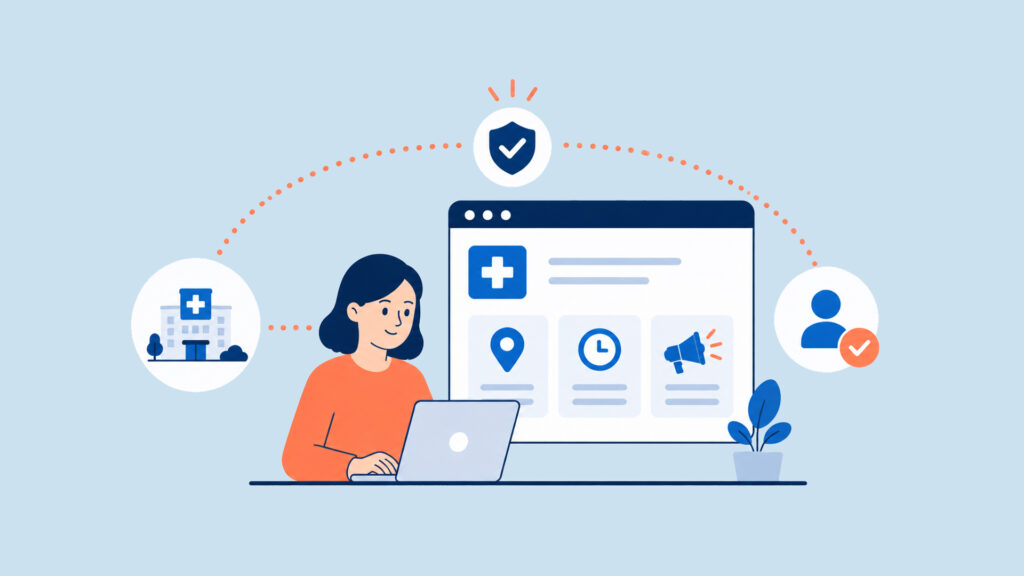
A well-configured CMS does not just remove friction. It gives your team the autonomy to keep your digital presence aligned with the reality of your clinical operations — and gives your patients accurate information when they need it. That alignment is worth investing in.
If you are ready to evaluate your options, we would be glad to talk through what the right approach looks like for your organization.

We work with health systems and healthcare organizations on the digital problems that affect patients and staff every day.