We ran our 2026 company retreat fully remote, and the thing that made it work was not the video platform. It was deciding early that nobody would sit and watch. Every session had something to build, respond to, or argue about. Two days later we had a shared experience that belonged to this company rather than a recording of one.
That decision came with a tradeoff we want to be honest about. A remote retreat gives up the hallway conversation, the shared meal, the late evening where the actual talking happens, all of which our last in-person retreat had in abundance. You cannot recreate those on a call, and trying to is how remote offsites turn into eight hours of slides. So we did not try. We built the retreat around what a distributed team can do well, which is make things together, and we let the rest go.
Retreat insights
2026
This article is part of a series from COLAB’s 2026 company retreat, where we invited friends of COLAB to spend time with our team and answer hard questions.
Why we committed to remote instead of recreating an offsite
COLAB is a remote company. Treating the retreat as a temporary exception would have sent the wrong message about how we actually work the other 363 days of the year. If our distributed setup is good enough to deliver client work, it should be good enough to hold the one gathering we build the whole year around.
The goals were plain: reconnect, have fun, learn something, and create an experience that felt like us. The design principle that followed was participatory, not presentation-heavy. Every time a session risked becoming a talk, we asked what the team would be doing during it.
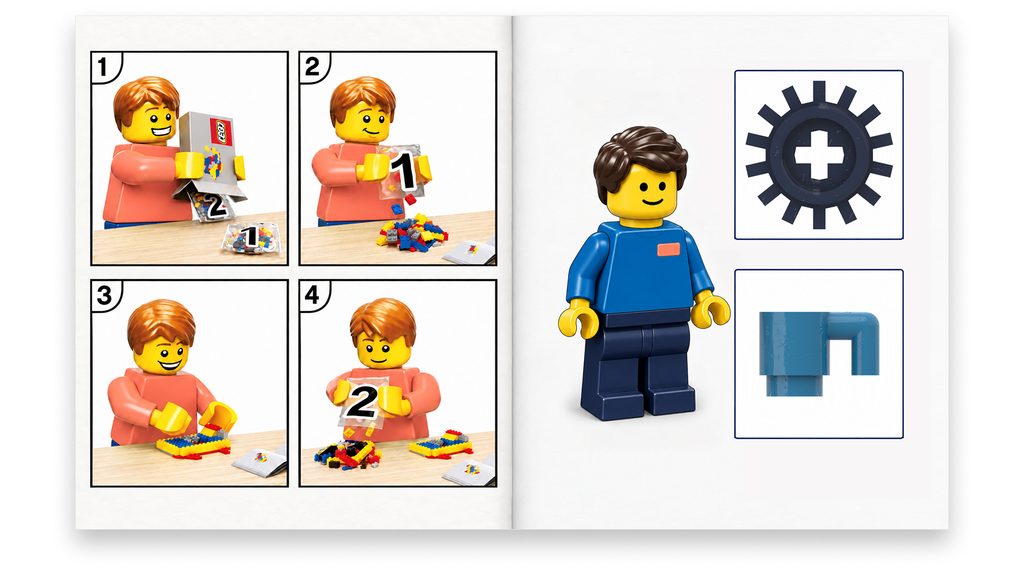
LEGO gave us a common language
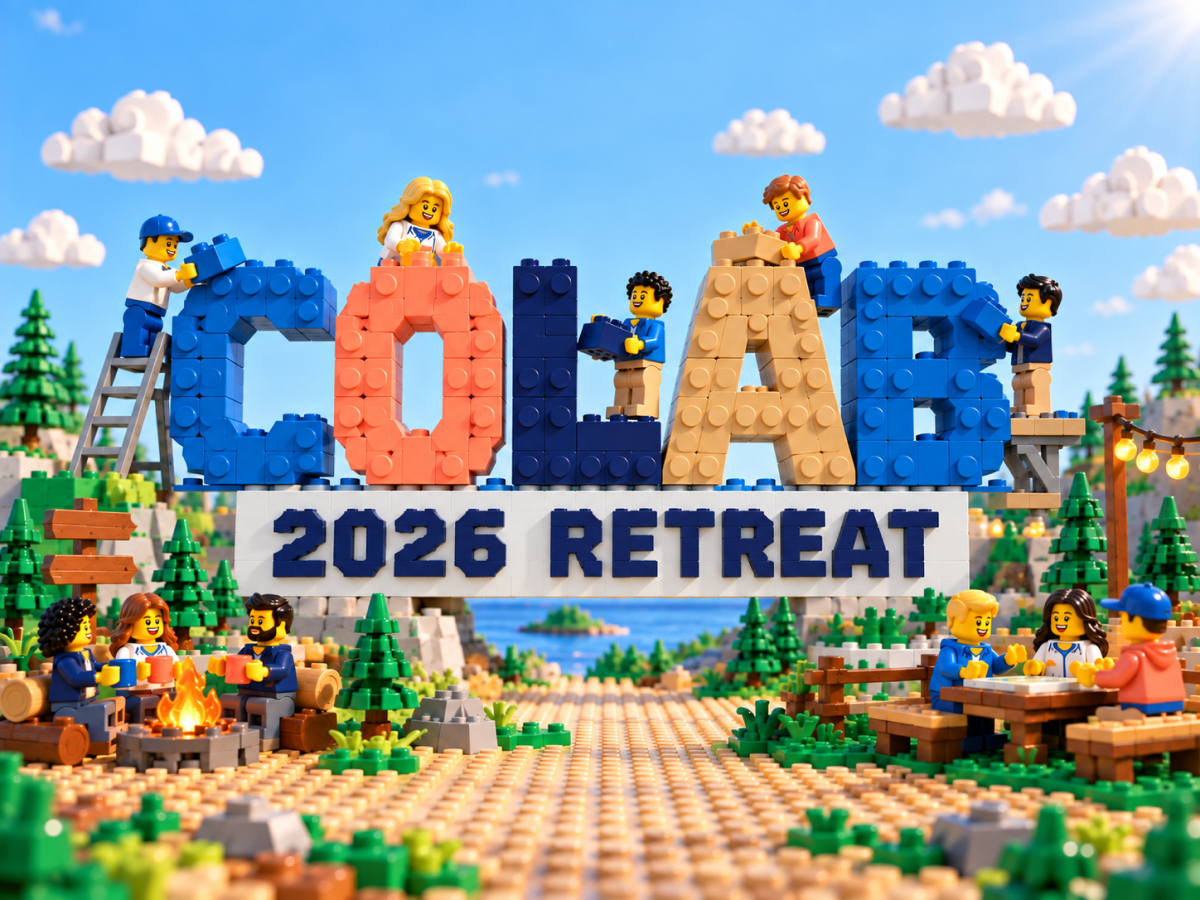
We anchored the retreat in LEGO, and not because it photographs well. It maps onto how we work. Individual pieces become something bigger when they are assembled with intent. There is structure in the system, and still room to make something nobody expected. It is playful without being childish, and it holds up across very different personalities and disciplines, which matters on a team of designers, developers, strategists, and QA.
The theme ran through the visuals, the physical kits, the activities, the team identities, and the closing hackathon. A theme that only shows up on the title slide is decoration. This one had to carry weight, so we gave it work to do.
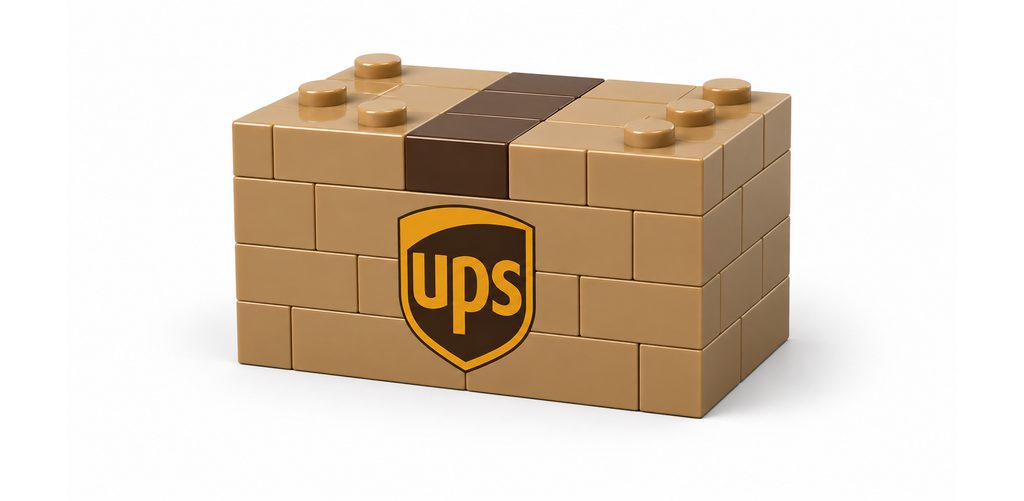
A physical box made a remote room feel shared
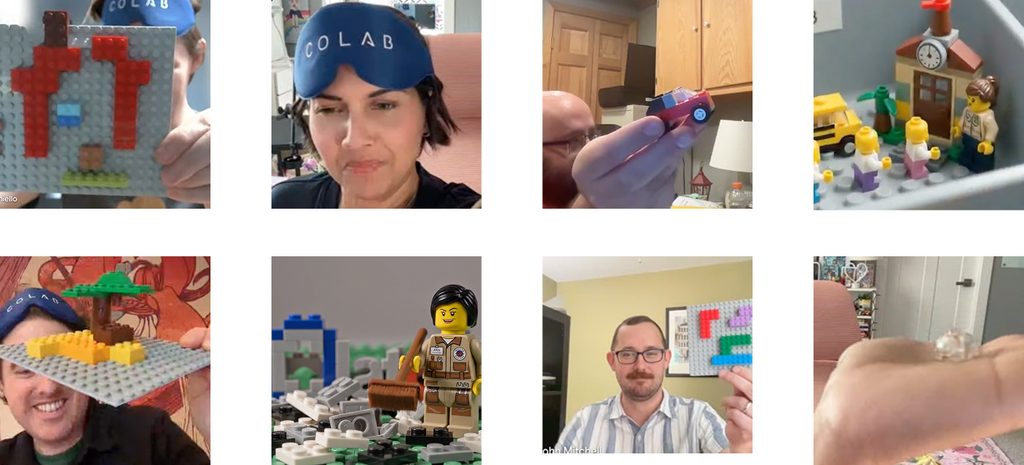
Everyone received a retreat box before day one and used it throughout both days. As new pieces were introduced across sessions, each person built a deskmate that stayed on their desk afterward.
Stanford researchers found that videoconferencing narrows attention because it holds people’s eyes on a screen, which measurably reduces the ideas they generate. Putting something physical in everyone’s hands pulls attention off the screen. We did not design the kits from that research, but it matches what the two days felt like.
For the hands-on exercises we shuffled people rather than keeping them with their own dedicated teams. The exercises explored creativity, interpretation, communication, observation, and working under constraints. Build a Duck asked everyone to make the same thing from the same pieces, and no two results matched. Vision Goggles, Memory Plates, and Blind Build each removed something people rely on, then asked them to work anyway.
We were testing whether a tangible object in everyone’s hands could stand in for being in the same room. It does not stand in for it. It does something else, and on a video call that something else may be better, because everyone is looking down at their own build instead of up at a grid of faces. Attention goes to the work rather than to the camera.
Personality surveys turned into team identity
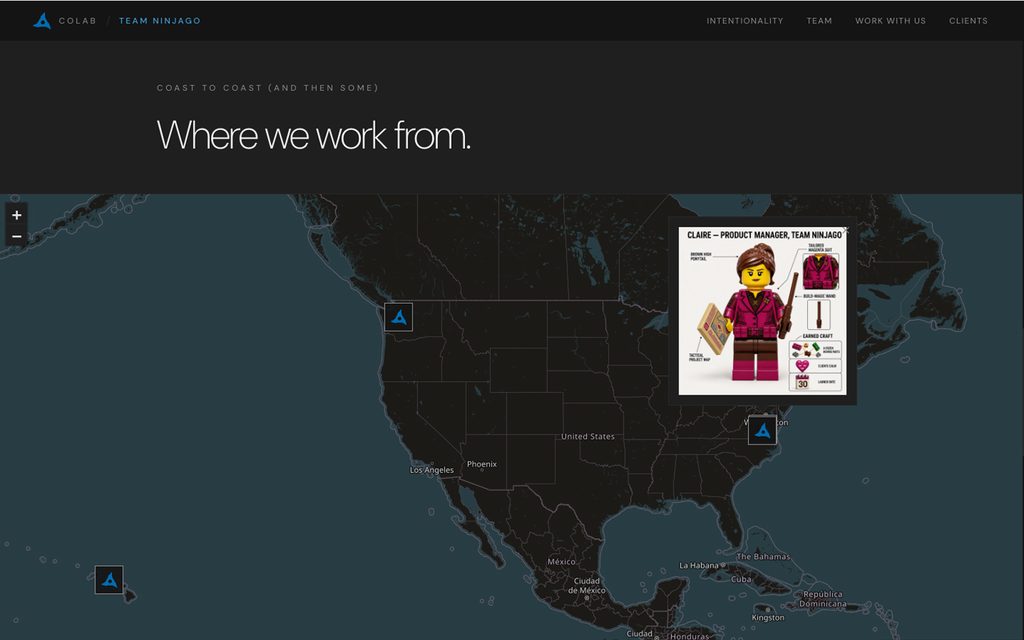
Before the retreat, everyone completed a personality-fit survey. Responses determined two things: the LEGO-inspired minifigure that represented each person, and the LEGO brand that fit their dedicated team. Teams became Ninjago, Technic, and Creator.
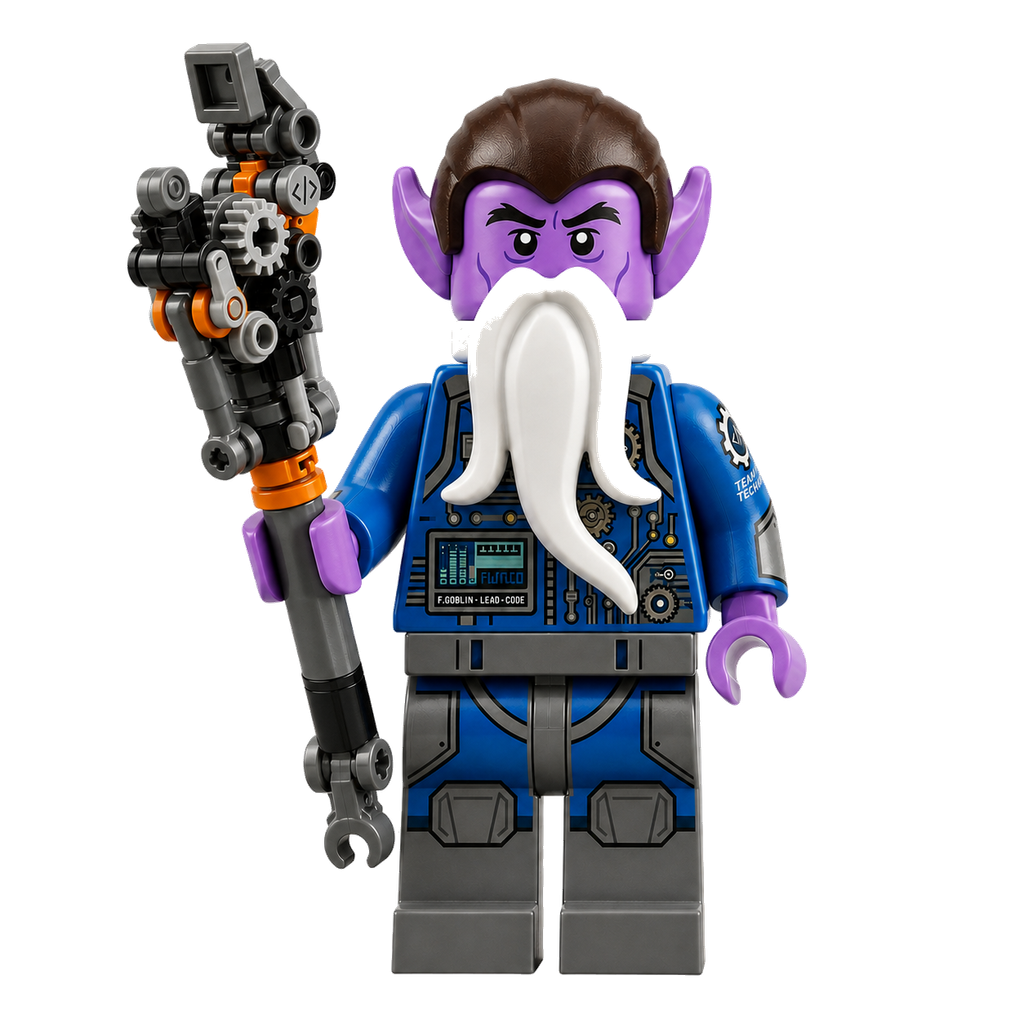
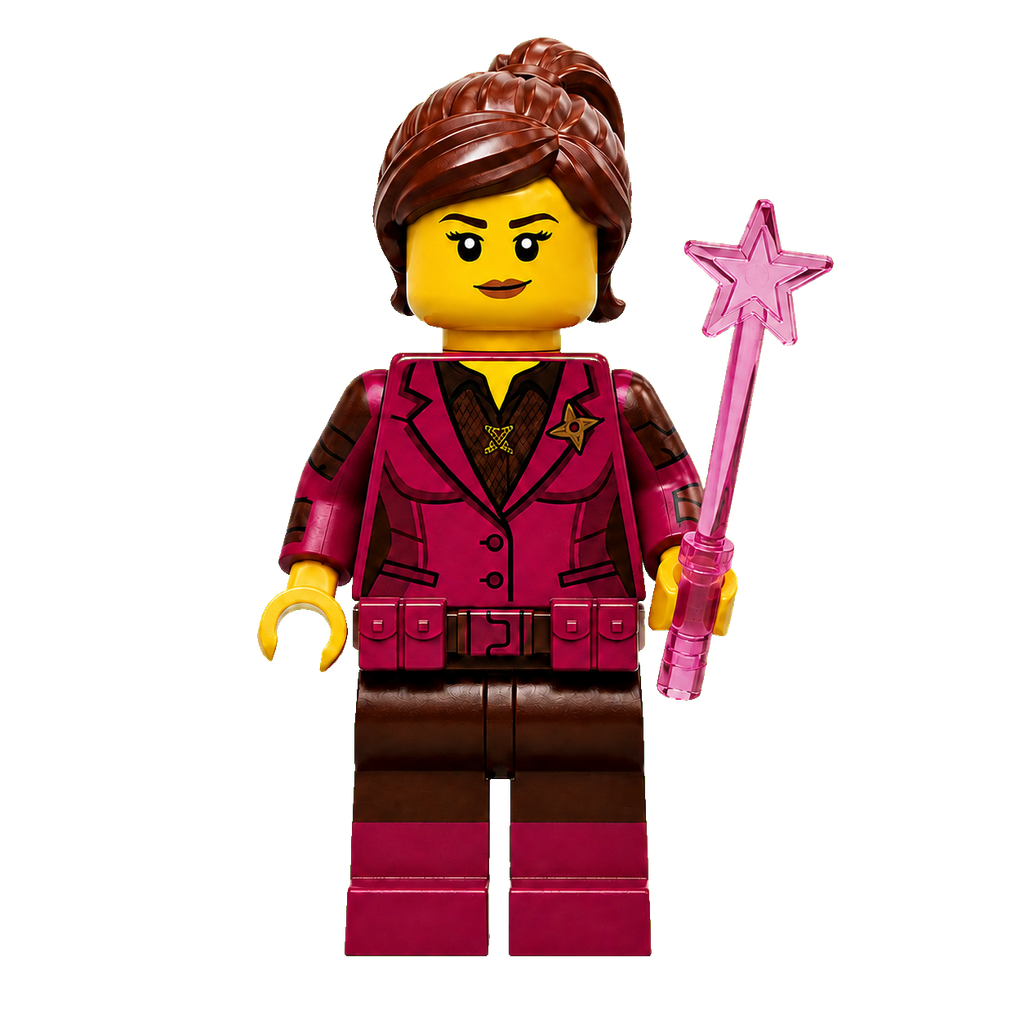
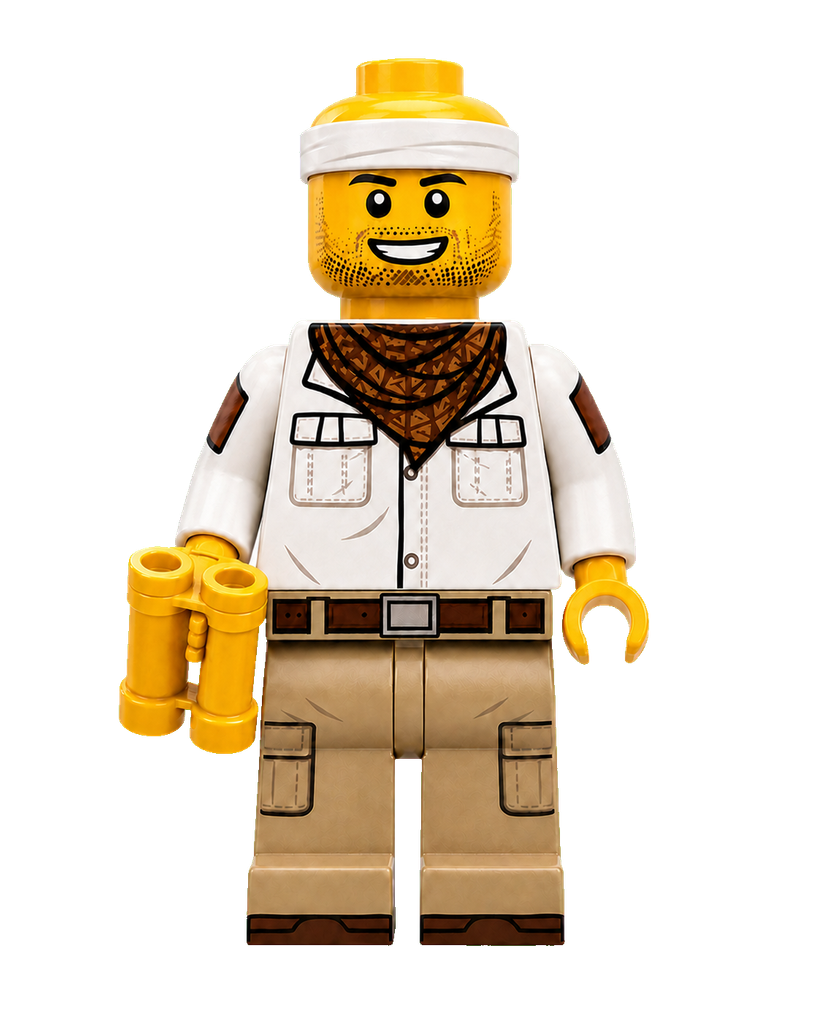
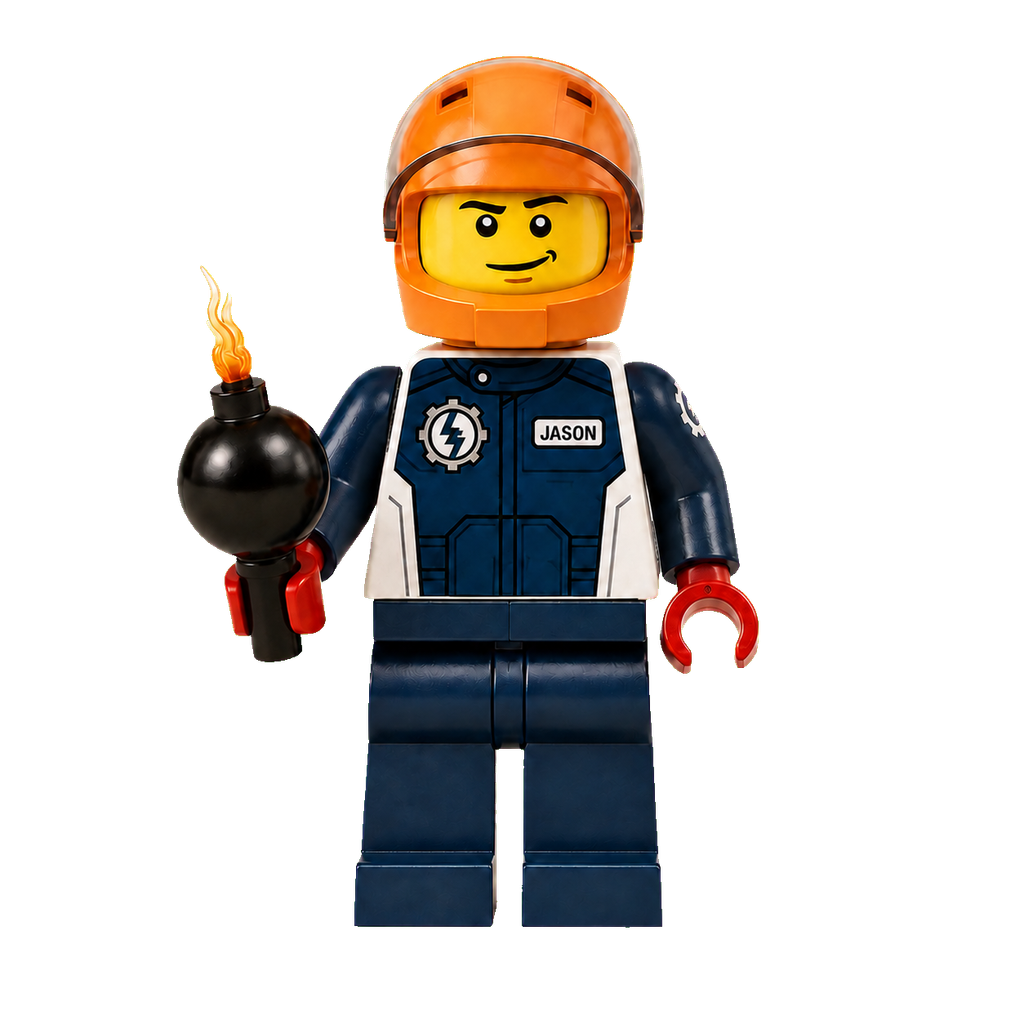
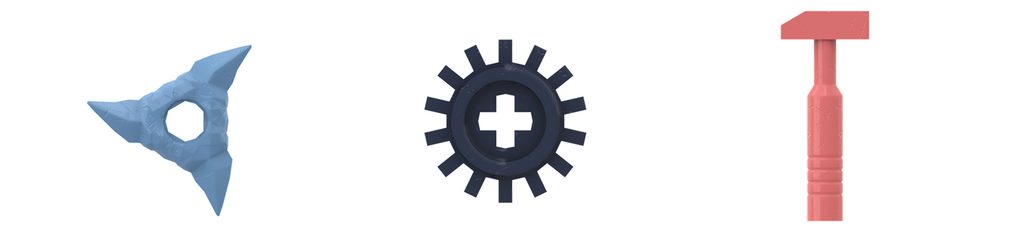
After years of operating as the previous teams (Team WYSIWookies and Team Code Krakens), it was time to shake things up. Part of the fun of a new team brand is that it encourages the team to talk about why they were assigned the team name, what it actually is, how it works, and what makes it valuable to everyone else. More on this challenge when we discuss day two.
Professional development ran inside the retreat, not beside it
We had heard clear feedback that the team wanted a bigger commitment to professional development. The obvious response would have been to add training sessions to the calendar. Instead we built learning into the retreat itself and let people choose their track: User Experience or Technology.

Topics covered AI, Figma, Webflow, branding, development workflows, and platform and hosting decisions. Guest speakers included Jordan Maslyn, Christie Thompson, Christopher Miller, Dave Ventresca, and Una Japundza. We also ran watch parties around four talks: Hacking AI for Creative Ops at Scale with Rory Flynn, Making a System AI Can Actually Use with Harvey Whiting, Figma Deep Dive: Agent-Built Plugins with Georgia, Avery, and Jason from Figma, and Parenting Claude: Guardrails for AI-Assisted Development with Chris Reynolds.
We brought in outside voices on purpose. A team that only learns from itself gets very good at its own habits and slowly loses sight of what else is possible. Practitioners from other companies do not share our assumptions, and that is the whole value.
We used the retreat to both discuss and test tools
If we were going to talk about experimentation, we needed to do some. We built our year-in-review using production tools we’ve never used before: Google Vids, AI video, AI voiceover, AI music/sound, on a real deadline with the whole company as the audience.
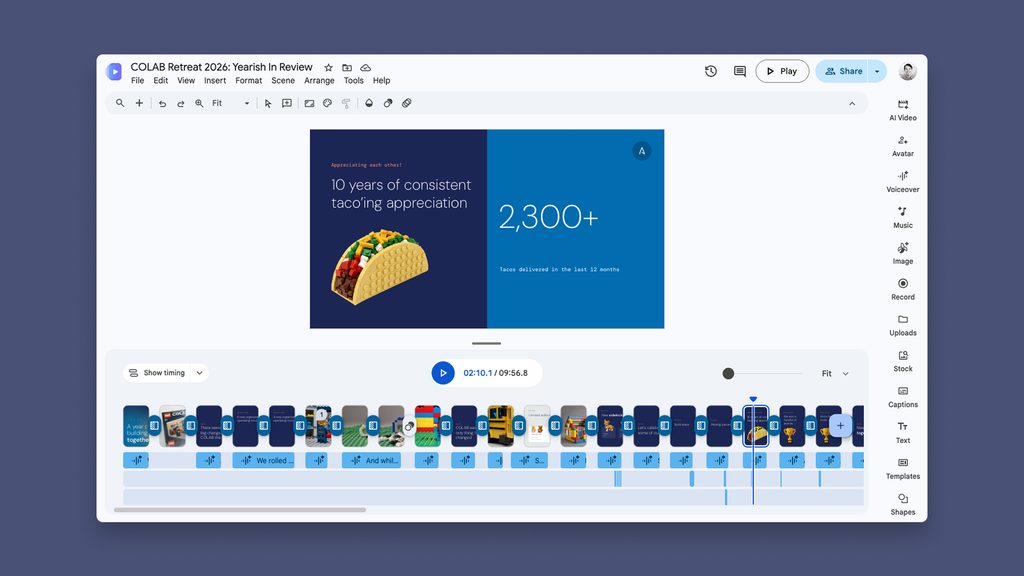
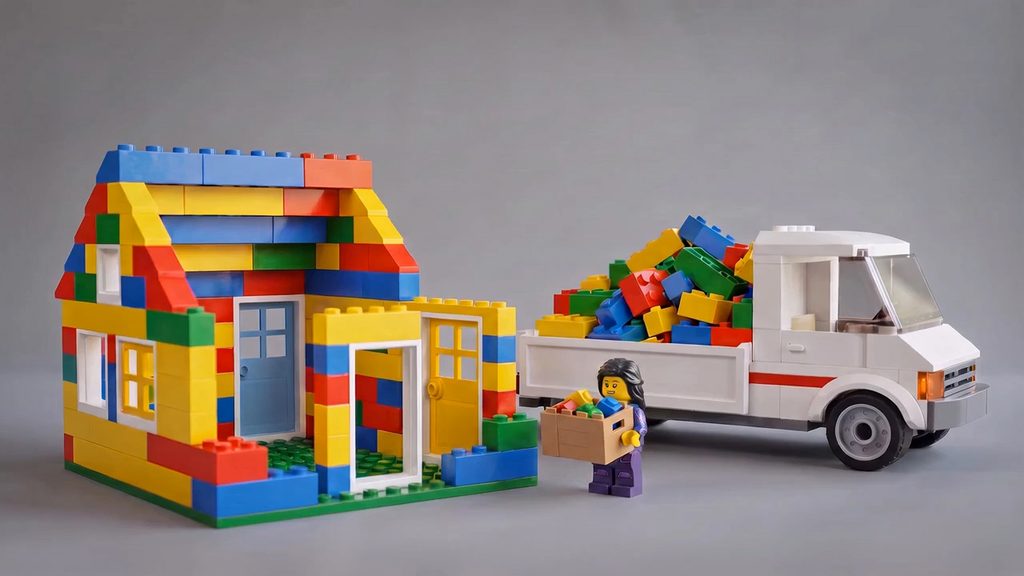
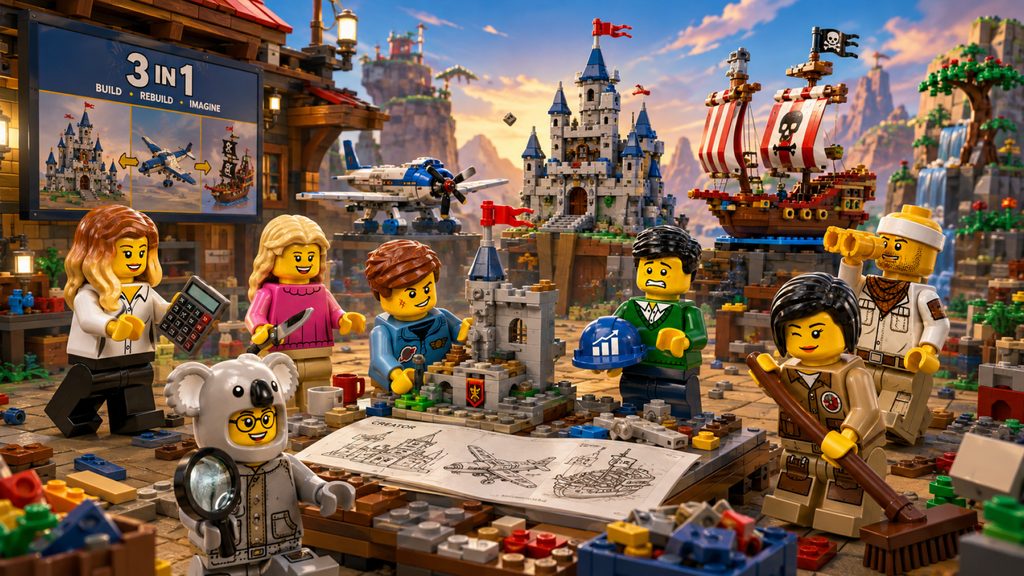
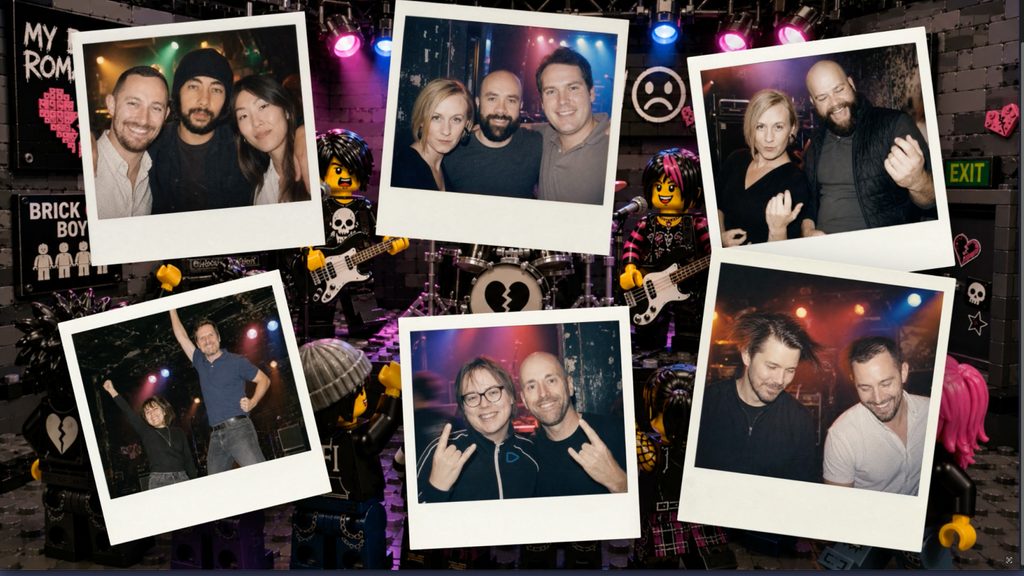
We used this to pressure test what assets and final products could be produced with inexpensive tools in a short amount of time.
The output celebrated the team’s year. The process made the point better than a session about experimentation would have, which is that learning happens faster through making than through hearing about making.
Day two ended with a two-hour hackathon
Each team had two hours to build and launch a live one-page website about themselves. Every team worked from a real brief, with goals, requirements, constraints, brand assets, and working tools. It is the same instinct behind our internal innovation challenge, which is that a real constraint produces better work than an open invitation to think about something.
The goals were Know Us, Work With Us, and Hire Us. The requirements: use the team’s brand assets, make the experience responsive, meet accessibility expectations, represent a core value, include something personal about each teammate, and keep the site under 500 words.
Then the part that made it feel like client work. Each team could choose one advantage, and only one: Time, Scope, or Support. Choosing meant giving up the other two. Anyone who has scoped a project under a fixed deadline recognizes that conversation, and it is the same one we have with clients when we scope and sequence real work.
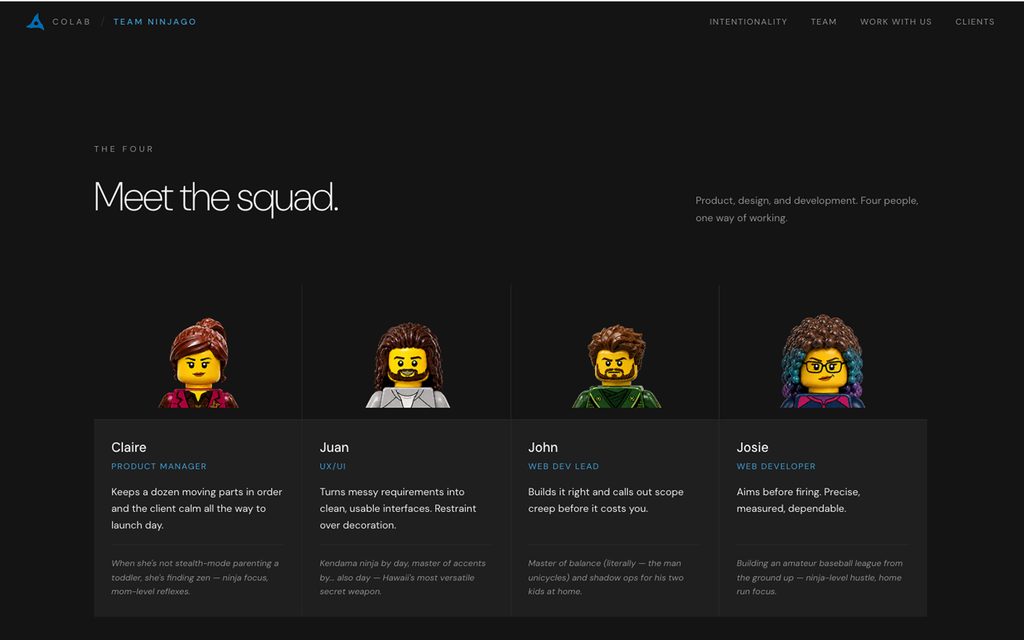
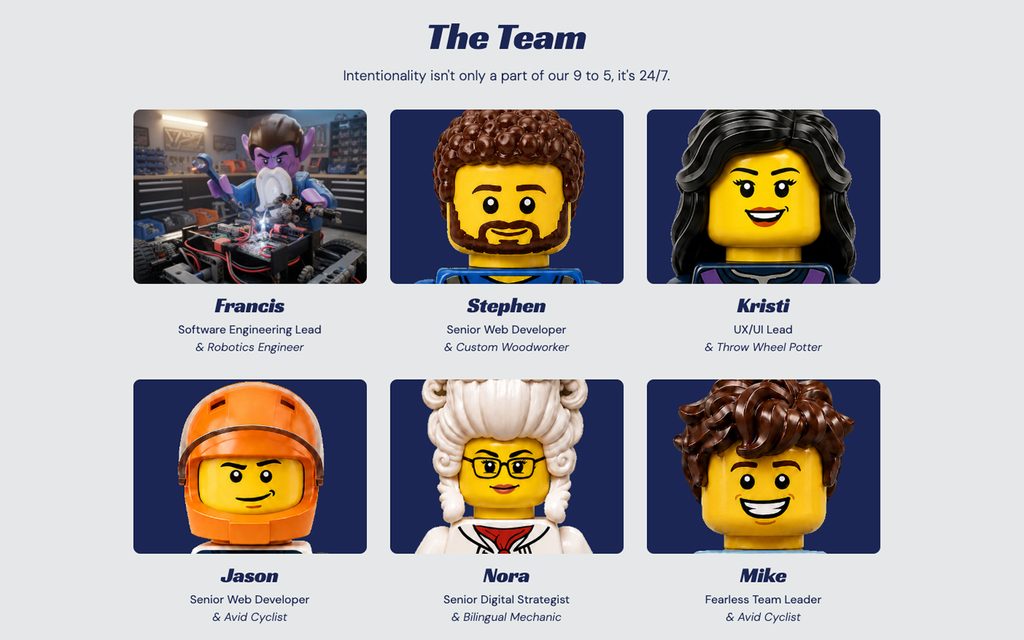
We scored the work equally across three areas. Quality covered how thoughtful, polished, usable, and effective the final experience was. Outcomes asked whether the site actually achieved its three stated goals. The COLAB Way measured how well the team demonstrated our core values through both the process and the output. Weighting all three equally was deliberate. A beautiful site that missed its goals did not win, and neither did a functional one built by steamrolling teammates.
What we learned
We surveyed the team afterward. The retreat scored 4.6 out of 5 overall, and the remote format itself scored 4.5. Useful numbers, though the written feedback was more useful than the averages.
Two things needed fixing, and both were about the clock rather than the content. People wanted built-in breaks. Two days of participatory sessions asks more of a person than two days of watching, which is the cost of designing against passive attendance, and we did not budget for it. Scheduling was the harder problem. We have an East Coast majority, a contingent in France, and teammates on the West Coast and in Hawaii. The same spread that makes a remote format worth doing, since nobody has to weigh travel against everything else on their calendar, is what makes the calendar difficult. Anyone planning this for a distributed team should solve the clock before they solve the content.
The live speakers were well received and the topics landed. The watch parties were valued less, and the feedback pointed at the talks we picked rather than the format. Discussion from watch parties were the most valuable part of those, so finding a better balance between watch and discuss would beneficial. A recording has to earn its slot the same way a live session does, and we chose those less carefully than we should have.
The hackathon was the clear favorite. What the team valued was specific. They liked building against a real brief while setting aside the process we normally run for clients. That process exists for good reasons and we are not abandoning it. Two hours without it gave people room to try methods they would never risk on a client project and they asked for more of that.
Mixing people for the hands-on exercises was deliberate and it paid off. The hackathon ran by dedicated team, which is how we wanted the final push to work. Everything before it shuffled people across disciplines on purpose, putting colleagues together who rarely share a project.
The economics are worth stating plainly. A remote retreat costs a fraction of an in-person one, and a 4.6 says we did not get a fraction of the experience.
What we missed was the unstructured part. Shared meals, a drink at the end of a long day, the conversations that happen because people are standing in the same place with nowhere else to be. No amount of design recovers those. This is not the format we would choose every year.
It is one we would choose again, and one we would recommend to anyone leading a distributed team who has been assuming a retreat means getting everybody on a plane.
Build better, together
The retreat was an experiment in whether a fully remote company can create connection, invest in professional growth, encourage experimentation, and reinforce its culture without putting everyone in one room. The LEGO theme gave us a shared language for two days. The idea underneath it is one we use year-round, and it is the standard we hold ourselves to on client work as well.
If this sounds like a place you would want to work, we post openings as they open. If you are rethinking how your own distributed team works and learns together, we are glad to compare notes.