A hosting platform built for one CMS can make decisions a general-purpose platform cannot, and those decisions show up in three places: how caching works, what your team can automate across a portfolio of sites, and how quickly a fleet-wide security problem gets handled. That is the trade worth weighing when you compare platforms. The monthly price is the easier number to compare and the less useful one.
Chris Miller and Dave Ventresca of Pressable spent an hour with the COLAB team at our September retreat, walking through the platform and taking questions from our engineers. We took notes with a particular reader in mind: the organization or agency that is past the point of treating hosting as a line item, and is now asking a harder question. Who handles a plugin vulnerability at 4:00 on a Friday afternoon, and what do they have to do to handle it?
Retreat insights
2026
This article is part of a series from COLAB’s 2026 company retreat, where we invited friends of COLAB to spend time with our team and answer hard questions.
Hosting gets chosen on price and reconsidered after an incident
Most platform decisions get made once, on cost, and then sit untouched until something breaks. The conversation that follows an incident is the better one, because it asks what the platform is opinionated about and whether those opinions match how your site is actually built and maintained. Those opinions are the part you cannot work around later.
What a single-CMS platform decides on your behalf
A WordPress-only host builds caching, update handling, and tooling around WordPress conventions instead of adapting a general-purpose platform to fit them. The practical effect is fewer platform-specific patterns for a developer to learn, and fewer places where hosting behavior and CMS behavior disagree with each other.
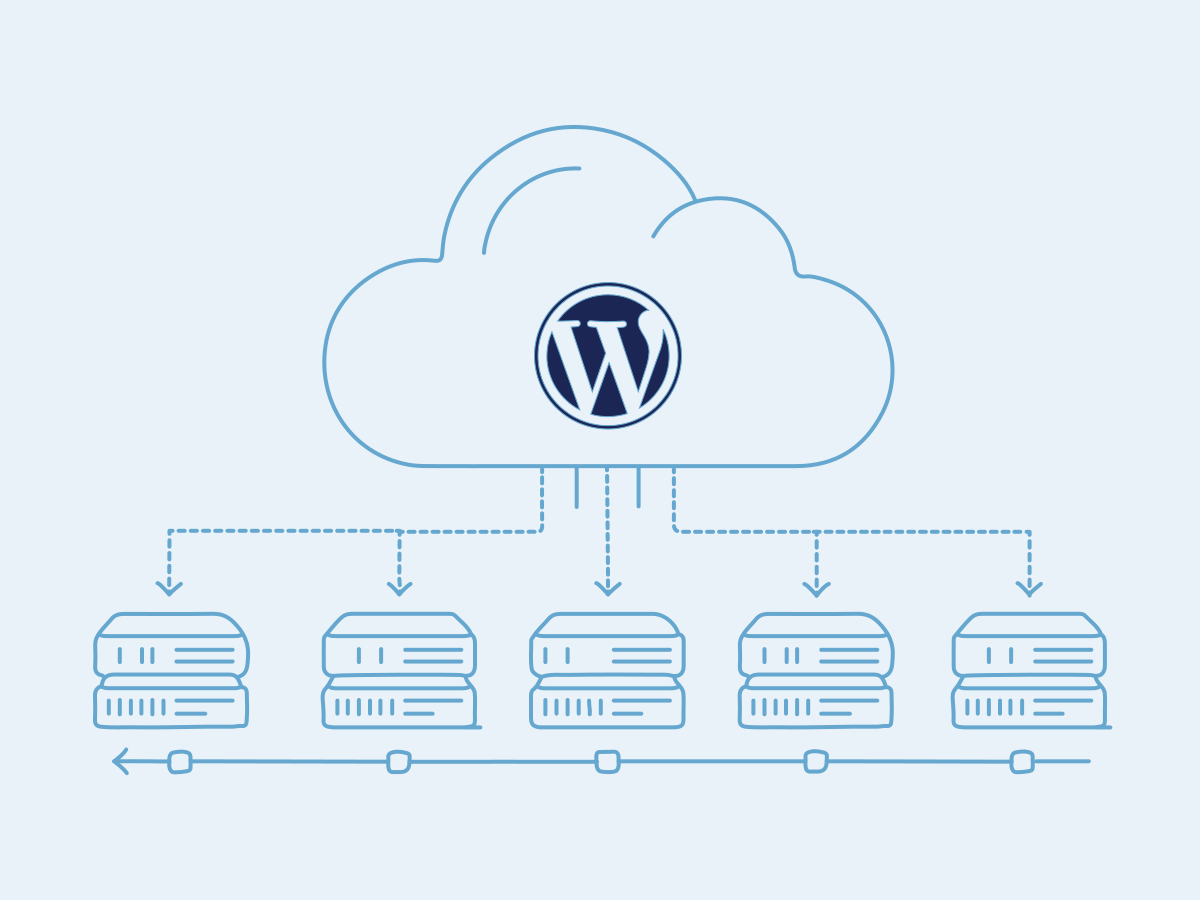
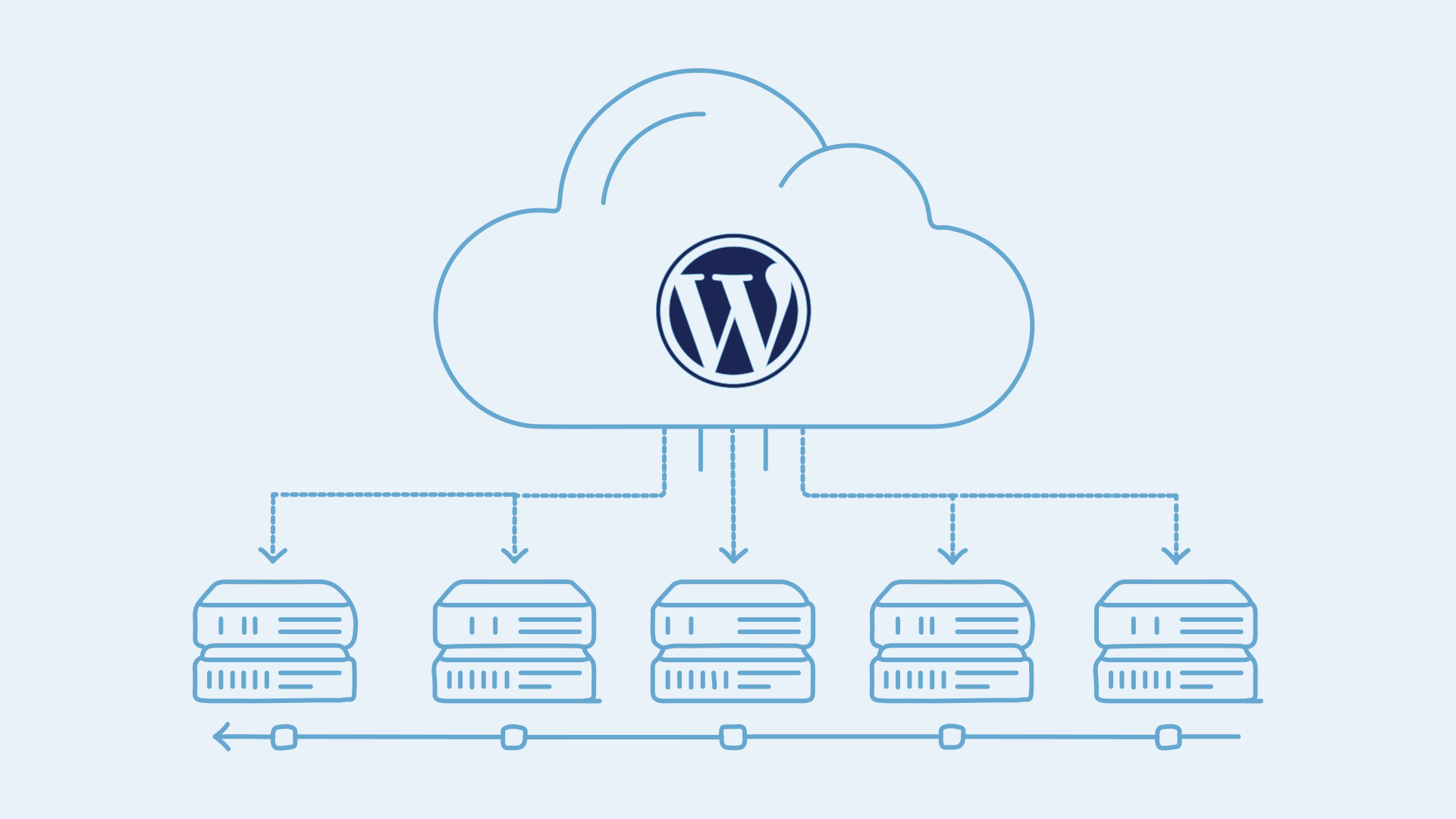
Pressable is WordPress only, built on WP Cloud, and part of Automattic. That focus is the premise underneath everything else. Caching is built on WordPress core caching rather than bolted alongside it, with edge caching and a CDN working from the same foundation. For a developer who already knows WordPress, that means the caching layer behaves the way the documentation says it should, and there is no platform-specific cache command to learn before the first deploy.
The same focus shows up in portfolio management. One view across many client sites, with plugin versions, environment status, and collaborator access in a single place, is the difference between a small operations group managing a hundred sites and that group falling behind. Pressable also publishes a service level agreement with 100 percent commitments on network, infrastructure, and hardware, each backed by service credits, which is more specific than most hosting marketing gets.
Where automation earns its place, and where it should stop
The demo that held the room was not a dashboard. Pressable’s API is available through an MCP server that mirrors what the dashboard can do, which means site management, user and DNS management, backups, plugin installation, WP-CLI commands, and log access can all be driven in plain language through an AI client.
Two examples landed with our engineers immediately. The first was fleet-wide plugin checking. When a vulnerability drops in a widely used plugin, and the public vulnerability databases show how routinely that happens, the useful question is which of your sites run the affected version. Answering it has usually meant a spreadsheet, or a script someone wrote and no longer maintains. The second was a root cause investigation Chris ran that morning, bisecting 64 active plugins on a site that was failing silently with a PHP fatal error until the responsible line turned up in a commercial plugin that needed updating.
The part we want cautious readers to notice is the posture around all of it. Analysis runs against a cloned staging environment, not production, and a person still owns the deploy. As Dave Ventresca, technical account manager at Pressable, put it, “that’s why we’re keeping humans in the loop here at Pressable. It’s really important, because AIs make mistakes.” We agree, and we would not recommend a platform that framed it differently.
What your team still brings
Continuous delivery comes from outside the platform. GitHub Actions was the example discussed, and other pipelines work the same way. Composer and Bedrock builds run through that external pipeline rather than being a platform default, which matters to teams whose WordPress practice is built on those patterns. Chris was candid that this is something he is advocating for internally.
Update handling involves a real trade-off. WordPress core security releases arrive on their own schedule and often without much warning. Pressable deploys them separately from themes and plugins, and deploys them fast, so sites are patched without anyone coordinating an update across a hundred properties. The cost of that speed is less control. Major versions are published at least 30 days ahead for compatibility testing, and holding on the previous version is possible, but patch-only automatic updating is a feature request rather than a setting. In practice that shifts maintenance from testing after a release to testing before one.
Local development is close but not identical. A DDEV configuration is available, which suited our team since we moved off Lando some years ago. Some hosted services, caching among them, do not run locally, so caching behavior has to be verified in a hosted environment rather than on a laptop.
How we weigh platform choice for clients
Platform choice follows an organization’s maintenance reality vs preference. A client with in-house developers and a client with one marketing manager who owns the website need very different answers. The second scenario is far more common.
A single-CMS host suits organizations whose traffic is mostly anonymous and cacheable, which describes most content and lead generation sites. Sites carrying heavy authenticated concurrency, large member portals, subscription publishing, or substantial commerce deserve a fit conversation before a migration rather than after one. Pressable’s own team said the same thing in the session. A general-purpose platform still makes sense where an organization runs both WordPress and Drupal and wants one contract, one support relationship, and one set of workflows across both.
There is no winner here and we would be suspicious of an agency that named one. What we can offer is the trade-off, stated clearly enough for you to make the call. That is the same posture we bring to how we work generally.
Thinking through your own platform decision
Thank you to Chris Miller and Dave Ventresca for an hour of straight answers, including the ones that did not flatter the product. We bring partners into our retreat rather than presenting to ourselves because our engineers ask better questions than our marketing does.
We handle hosting and ongoing support for organizations that would rather not think about their platform very often. If you are weighing a platform decision, or you inherited one and are not sure it still fits, let’s talk.