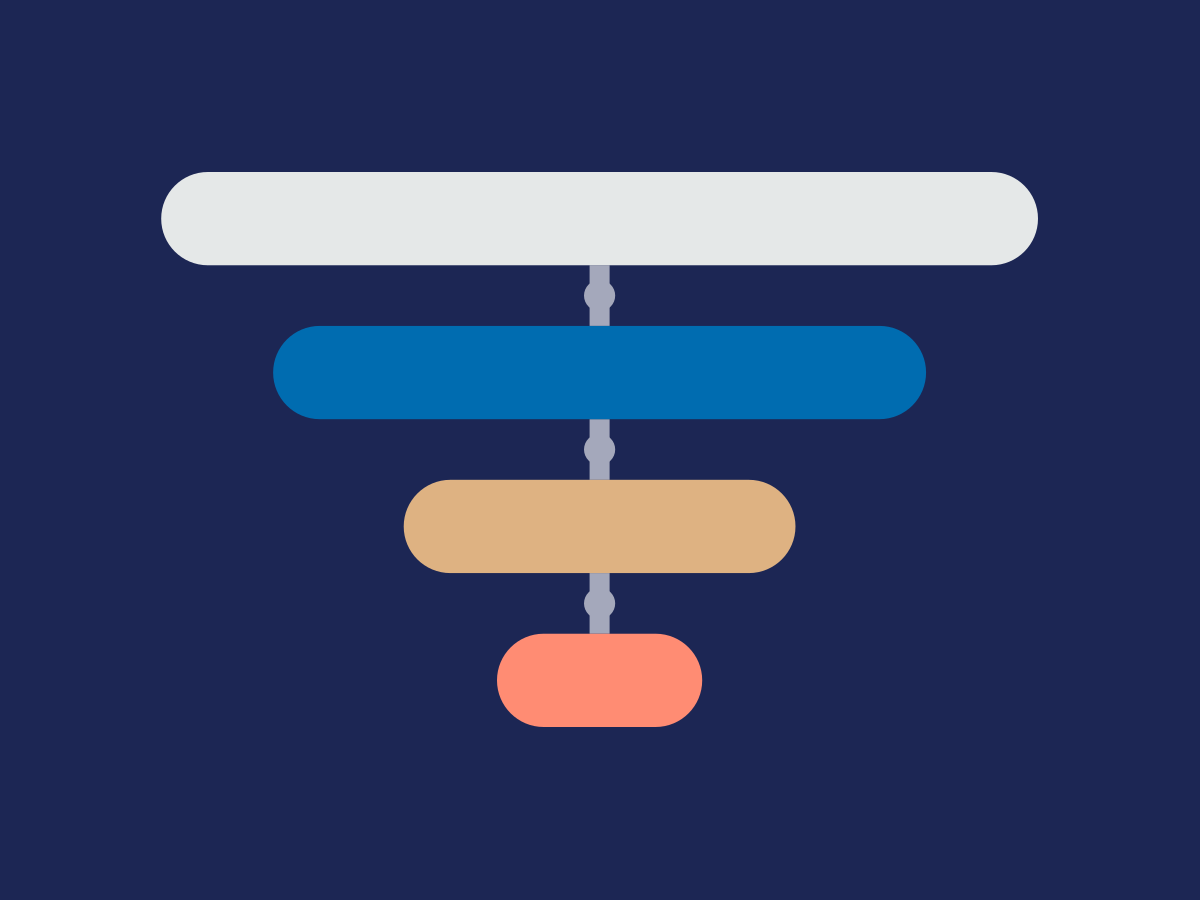

It’s not always clear what to expect when you reach out to a digital agency. This post outlines how most of our client relationships begin, what we’re trying to accomplish at each stage, and how we think about working with the organizations we partner with.
Surprises during a sales process tend to predict surprises during a project. We’ve learned that the hard way. When you know what comes next and why, you can make an informed decision early about whether this is the right fit. That saves time on both sides and creates a more honest foundation for the work that follows.
The Fit Call

The first conversation runs about 30 minutes. It’s a two-way exchange, not a pitch.
The goal is straightforward: we want a general sense of what you’re working on and what you need. We’re not trying to solve anything yet. We’re trying to understand enough to know whether it makes sense to go deeper, and if so, what that conversation should look like.
What you should know going in: we’re evaluating fit, not just demonstrating value. Not every engagement is one we should take on, and this is where we begin to figure that out. There are two possible outcomes. One is a clear next step. The other is an honest acknowledgment that this isn’t the right engagement for either of us, with a specific reason and, where we can, a referral. Both outcomes are useful.
The Impact Conversation

If the Fit Call confirms we should keep talking, the next step is a longer conversation: 60 to 90 minutes, built around a specific question. What would it look like for an engagement together to produce real results for your organization?
Not what to build. What to achieve. More business coming through your website. Clearer paths to conversion. Better tools for the teams that depend on it day to day. We want to understand your organizational goals well enough to say, with confidence, whether a digital engagement can actually address them.
This is what distinguishes how COLAB works: we measure success by what clients get back, not just by what we deliver. We don’t feel good about an engagement we can’t return on. So this conversation comes down to one question: are the problems you’re dealing with problems we can solve together?
If the answer is yes, we’ll talk about investment. What level of engagement would be appropriate to achieve those outcomes, and what has that looked like in comparable situations?
The Proposal

When we both leave the Impact Conversation with a clear picture of what it will take to make a real difference for the business, we build a proposal. Depending on the nature of the work, that proposal will include two or three options, each reflecting a different scope with its own benefits and trade-offs.
Each option reflects a different answer to the same question: how much do we accomplish together, in what timeframe, to reach the level of impact you’re looking for? The real variable isn’t quality. It’s trajectory: how quickly and how far you want to move, relative to the investment you’re ready to make. We present the options this way so you can see what you’re actually choosing between, not just react to a number.
We include a recommendation. We won’t make you guess what we’d do. If you want to see what this looks like in practice, our work reflects the kinds of decisions these proposals are designed to support.
The Partnership Plan

Choosing between the proposal options is rarely as straightforward as picking one and moving on. Most clients end up with something that draws from different parts of each option, depending on what will actually deliver the most value for their organization.
In the Partnership Plan, we work through that together. We identify what creates the most value for your goals, sort through what has to happen, what would be good to have, and what we’re trading off. This isn’t about writing a new proposal. It’s about defining the scope of what we execute together and the terms that go along with it. The output isn’t a document we hand you. It’s a plan we built together.
The Statement of Work Review

The Partnership Plan establishes what outcomes we’re delivering together. The Statement of Work Review is where we confirm how the work will actually be executed. It’s a tactical checkpoint, making sure that nothing was lost in translation from the conversations we’ve had to the contract in front of you.
We write our contracts in plain language. No legal jargon to parse, no terms that require a lawyer to interpret. We also include explicit exclusions and assumptions, so you know exactly what is and isn’t part of the engagement. There shouldn’t be anything in the document that surprises you. If something reads differently than intended, we address it before anything is signed.
That’s It, Now on to the Work!
What we’ve found is that the most successful engagements come from a genuine fit between client and agency. That kind of fit is hard to confirm through a brief conversation and a proposal alone. It takes the full process.
Our process is designed to make sure that we’re compatible and that we’re able to provide real value. Throughout each stage, we’re evaluating the relationship just as you are. Not to scrutinize you, but because doing good work together requires that both sides understand what’s actually needed. What do you need to achieve? What does COLAB need to deliver for that to happen? When we can both answer those questions with real clarity, the engagement starts from a much stronger position.
If we reach the end of this process and that clarity isn’t there, we’ll say so directly. A poor fit costs both sides more than a conversation that doesn’t move forward. And when we do say yes, it means something. That’s true of how we approach every client relationship.
What happens once we’re working together? We walk through that in our article: How We Partner with You for a Website Redesign: The Step-by-Step Process.
Ready to Get Started?
If it sounds like the way you’d like to work and the problems you’re solving feel like the kind we’re built to address, we’d love to start a conversation. The Fit Call is the right place to begin.